When something feels off in your house, your eyes rarely give you the full story. A bedroom wall looks freshly painted even when the room refuses to cool down at four in the afternoon. A ceiling looks clean and dry right up until a monsoon leak finally stains the drywall. Your windows look completely clear from the living room couch even after their seals have given out.
For years, homeowners only had two ways to figure out what was happening behind the surface: guess, or start cutting into drywall. Thermal imaging gives you a third option. It lets you see how your home is actually performing in real time.
How a Thermal Camera Works in Plain English
If you put a warm mug of coffee and a glass of ice water next to each other on the kitchen counter, a normal camera just shows two cups. A thermal camera shows their temperatures in bright, contrasting colors.
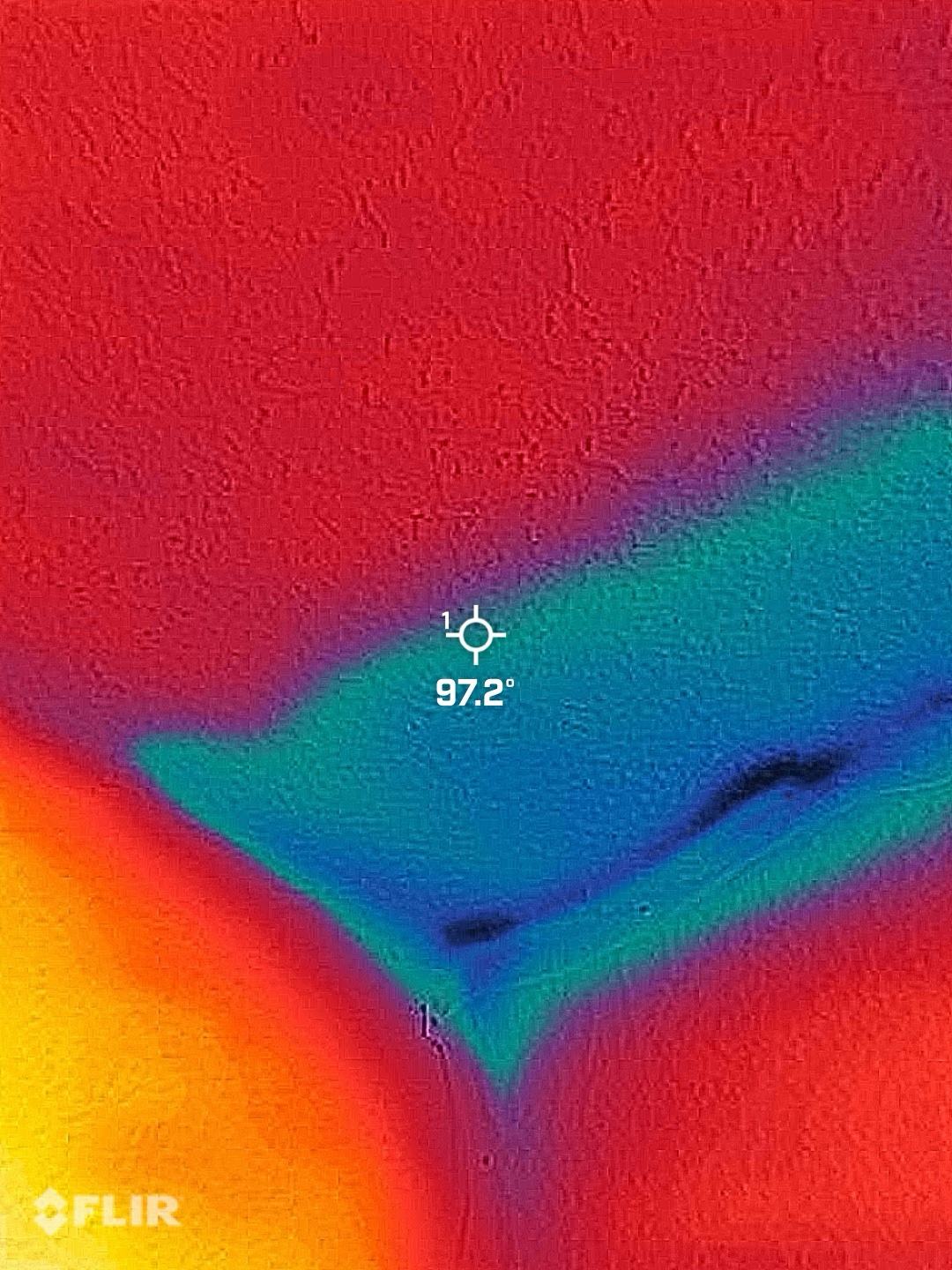
Every surface inside your house holds and radiates heat slightly differently. A thermal camera reads those surface temperatures pixel by pixel and translates them into a visual map. Cooler spots show up in deep blues and purples, while warmer areas glow yellow, orange, and bright red.
What you are looking at is the temperature footprint that conditions behind the wall leave on the surface. In Southern Arizona, where outdoor temperatures swing dramatically from scorching afternoons to cool desert nights, those footprints stand out with remarkable clarity.
Five Things a Thermal Scan Reveals Inside a Tucson Home
When I walk through a home with my associate Kobe, a certified thermographer, we use thermal imaging to check the spots where desert homes work the hardest.
1. Settled or Missing Insulation
Drywall looks the same whether there is thick insulation behind it or an empty cavity. On a warm afternoon in Tucson or Marana, a spot in the ceiling or an exterior wall with missing or slumped insulation shows up right away as a bright, warm patch against the cooler insulated areas around it. On a cold winter morning, that same empty spot shows up as a dark blue cold streak.
2. Failing Window Seals and Frame Heat Gain
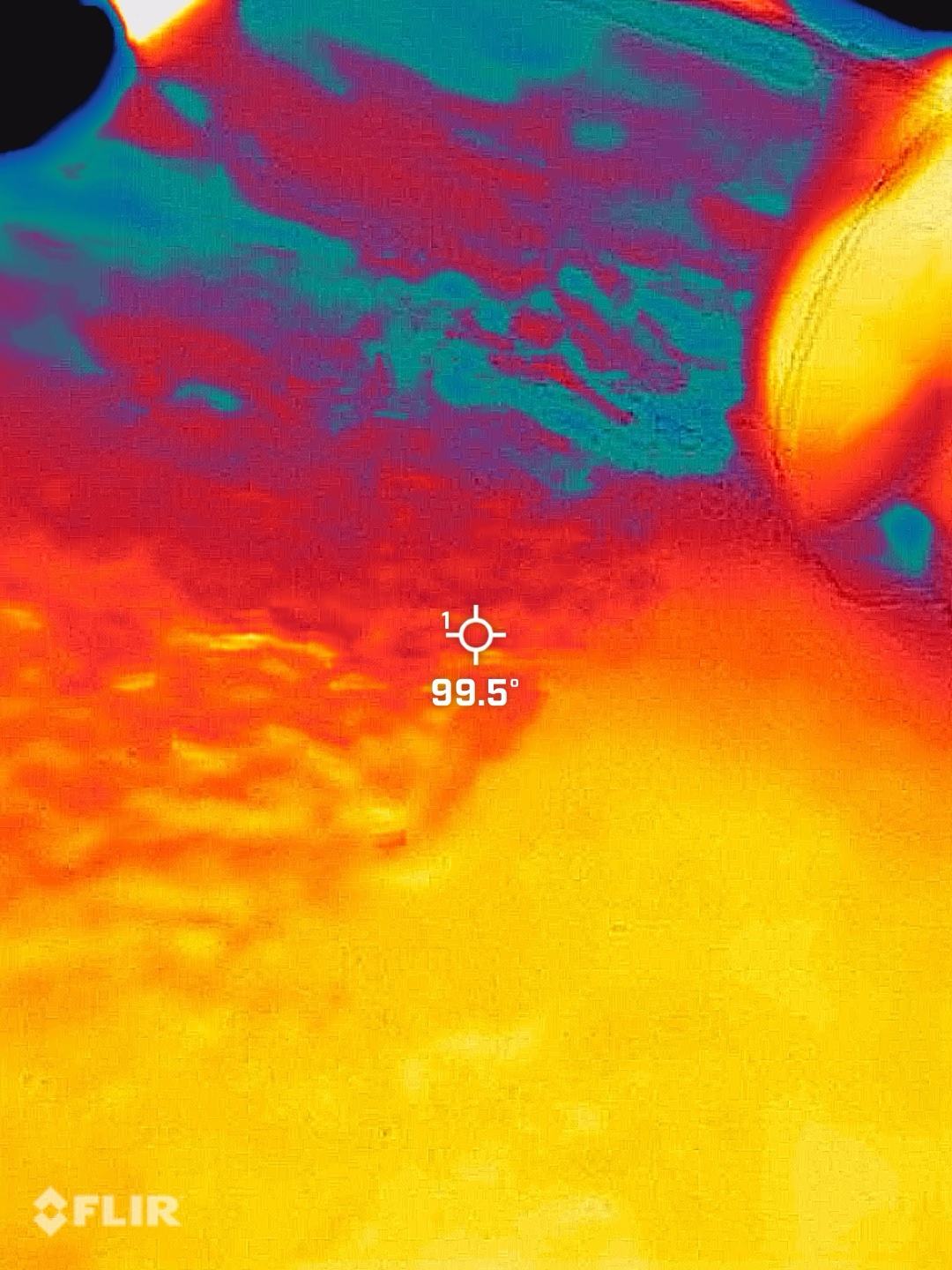
Many homeowners assume that if a window is not cracked, it is still doing its job. Over time, extreme sun dries out builder-grade window seals and allows the insulating barrier between the glass panes to fail. Through a thermal lens, you can see heat pouring straight through the glass, the frame, and the perimeter seams where the window meets the stucco.
3. Air Leaks Around Doors and Openings
Conditioned air loves to escape through the smallest gaps. A thermal scan around sliding glass doors, front entryways, attic hatches, and baseboards shows clear temperature trails where outdoor air is sneaking into the room and your cooled or heated air is slipping out.
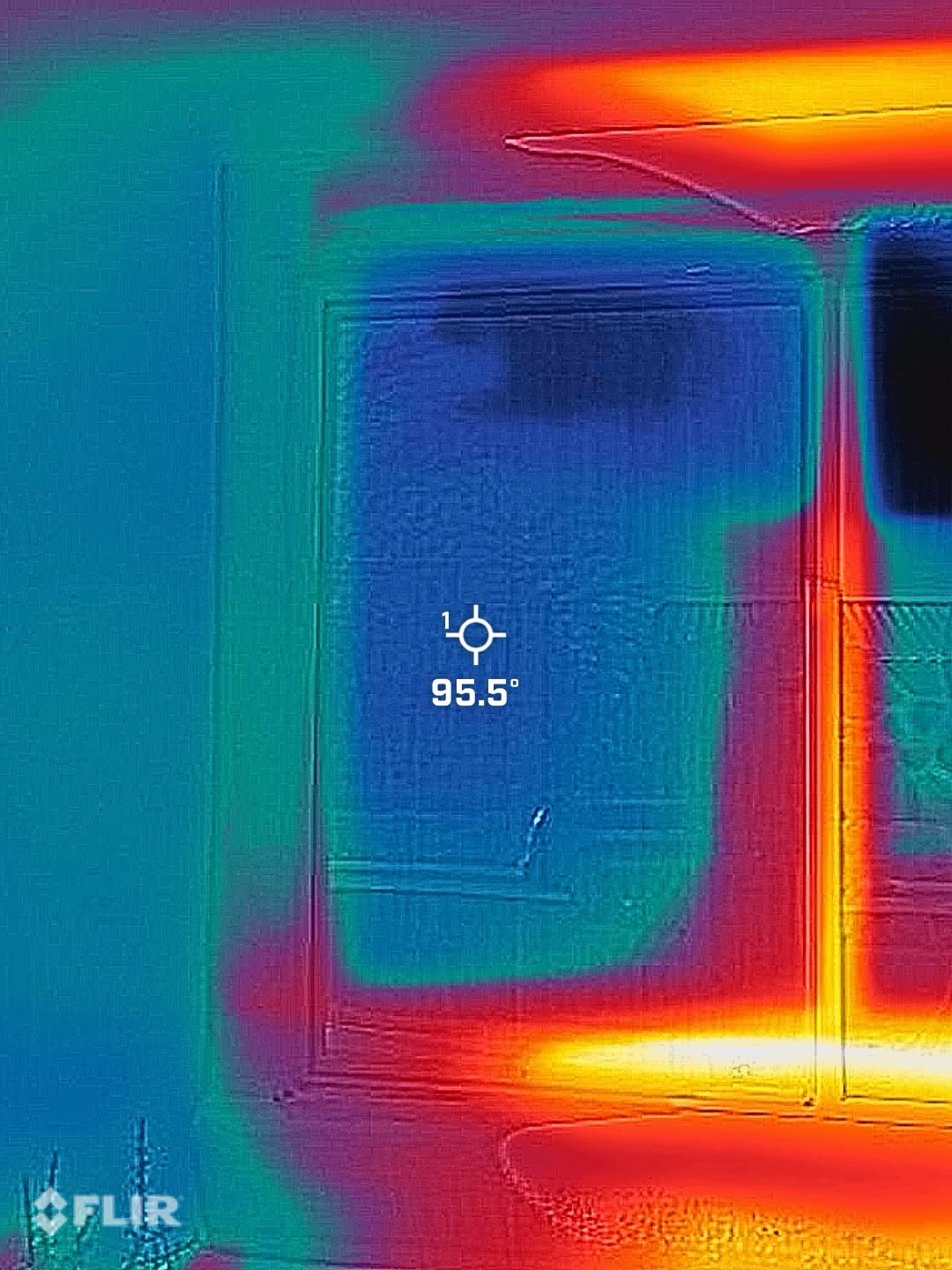
4. Moisture-Damaged Areas Worth a Closer Look
Water holds onto temperature differently than dry drywall and wood, and damp materials cool down as moisture evaporates. When water sneaks beneath roof underlayment, around an exterior stucco crack, or behind a shower wall, it creates a distinct cool pattern on the thermal screen long before a brown water ring ever appears on your ceiling.
5. Heat Gain Through the Roof and Attic
In our climate, the roof takes a relentless beating from the sun. Scanning the ceilings beneath your attic or flat roof shows how much solar heat is pushing down into your living space and helps pinpoint areas where your roofline and ceiling need attention.
How to Use Thermal Information Before You Spend Money on Repairs
The biggest advantage of seeing your home through a thermal camera is confidence. Instead of relying on a contractor's hunch or replacing parts of your home blindly, you can see which walls, ceilings, or windows are actually causing the problem.
Sometimes the scan shows that a concern is minor and can wait. Other times, it shows that heat gain across all of your original windows or moisture beneath an aging roof is the real reason your home feels uncomfortable. Either way, you get to decide on your next step with real visual proof in front of you.