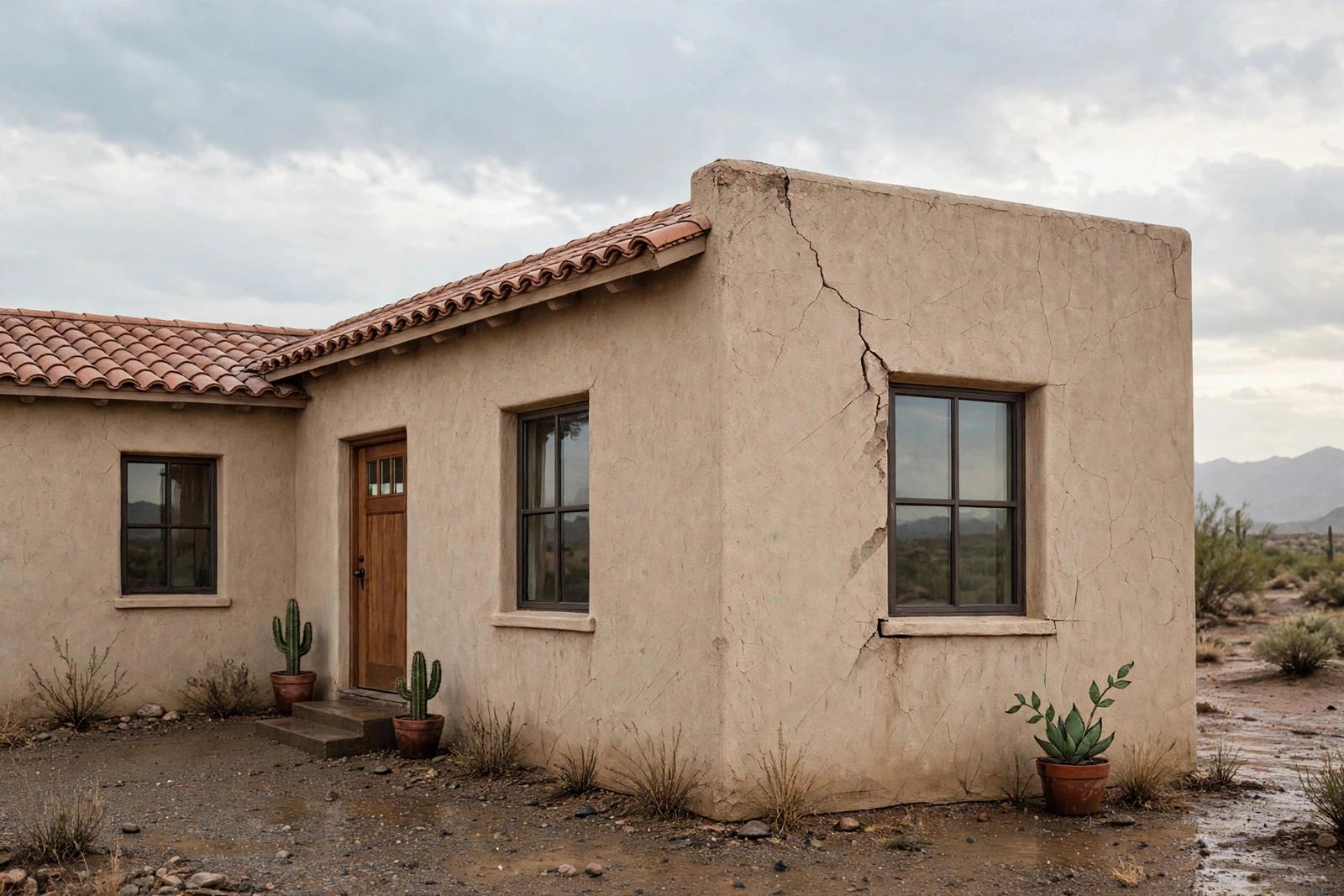
Take a slow walk around the outside of almost any stucco home in Tucson, Marana, or Sahuarita, and you will spot a few jagged lines spidering across the walls or branching out from the corners of the windows.
Stucco has been the go-to exterior finish in the Southwest for generations because it stands up to fire, termites, and dry heat. Yet because stucco is essentially a thin shell of cement plaster applied over wood framing, lath, and foam or sheathing, it has very little flex on its own. When the desert puts stress on the structure underneath, the stucco shows it.
Knowing why those cracks happen, and how to tell a harmless surface blemish from a crack that is letting water into your wall, helps you protect your home before small issues grow.
Three Reasons Stucco Cracks So Often in Southern Arizona
1. Daily Thermal Expansion and Contraction
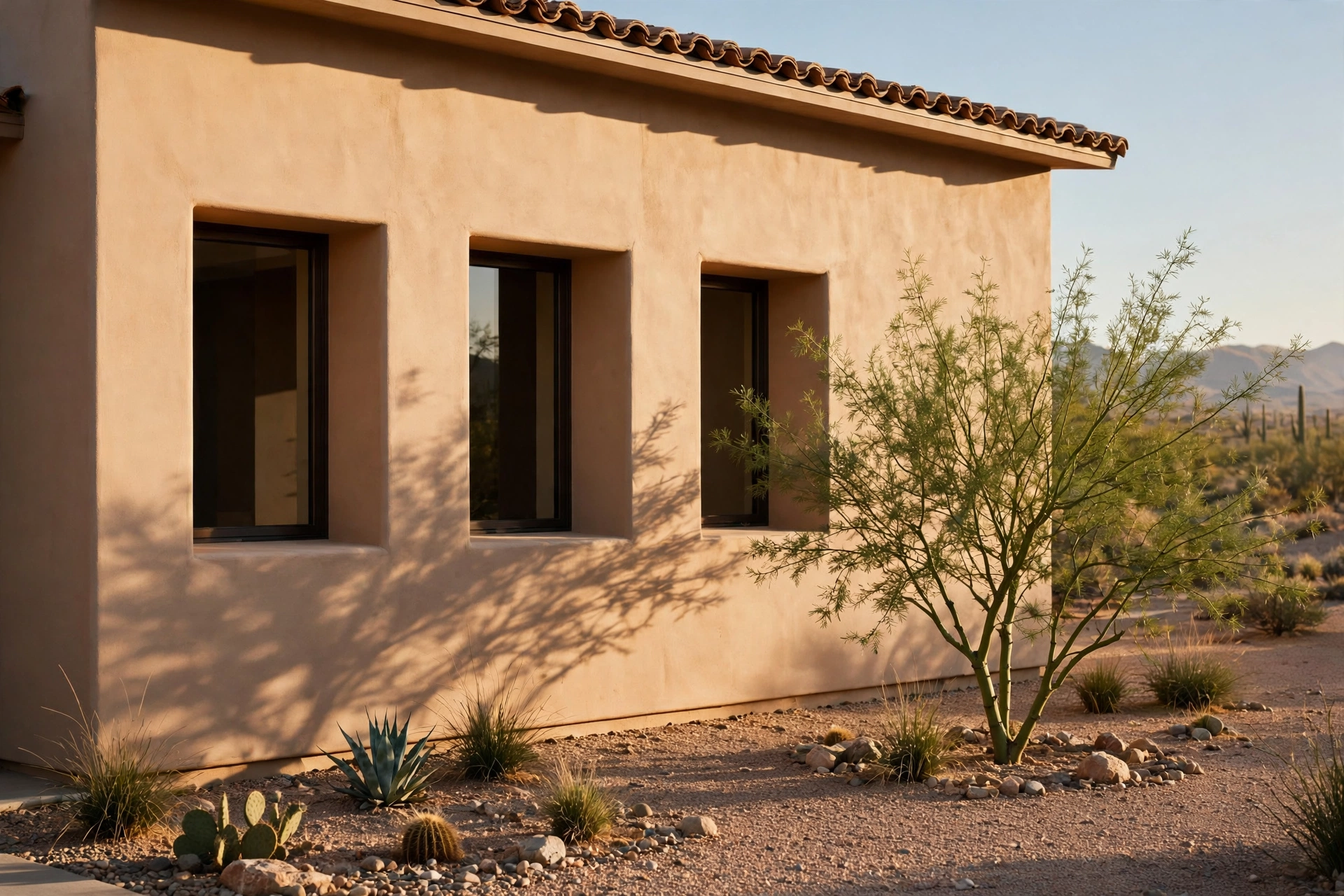
Southern Arizona has some of the widest daily temperature swings in the country. In the spring and fall, outdoor air temperatures regularly swing thirty to forty degrees between sunrise and late afternoon, and the surface of a west-facing stucco wall baking in direct sun gets far hotter than the air around it. Every afternoon, the stucco heats up and expands. Every night, it cools down and contracts. Over the years, that daily stretching and shrinking fatigues the plaster, especially around rigid openings like windows and doors.
2. Desert Soil Movement and Natural Settling
Much of the Tucson basin sits on expansive clay and hardpan caliche soil. For months at a time, the ground is bone-dry. Then summer monsoon storms dump heavy rain in a single afternoon, causing the soil beneath the foundation to swell and shift as it absorbs moisture and shrinks back down as it dries. Even slight settling in the slab or framing transfers tension straight into the brittle stucco shell.
3. Moisture Getting Behind the Stucco
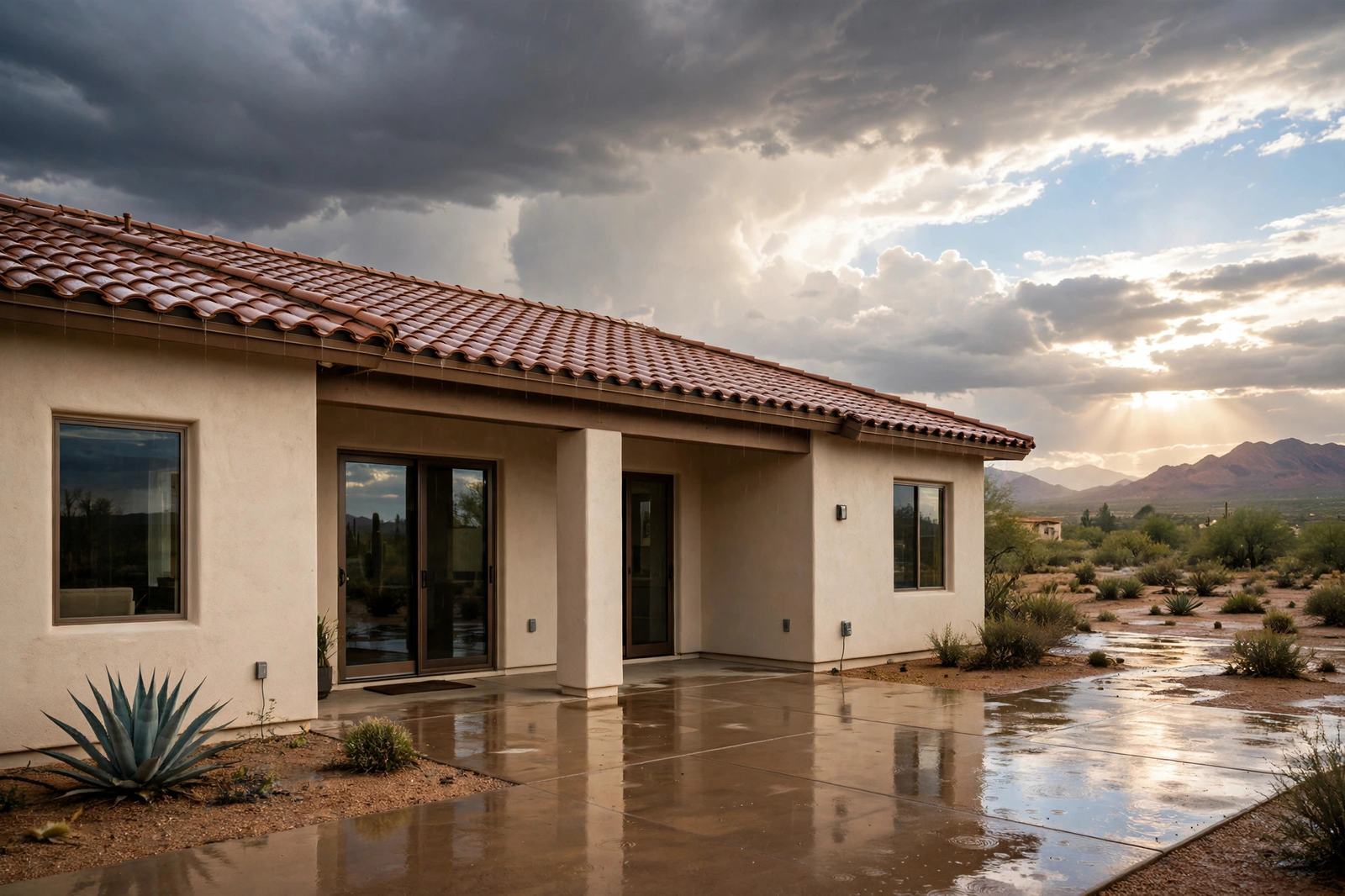
Stucco is designed to shed water on the outside, not trap it on the inside. When rainwater sneaks through an unsealed gap around a window frame, a cracked parapet cap on a flat roof, or a leaky roof valley, it dampens the building paper and wood framing behind the stucco. Wet wood swells, metal lath can corrode, and as that trapped moisture heats up in the sun, it pushes outward and pops the stucco open from behind.
Hairline Cosmetic Cracks vs. Cracks That Let Water In
Not every crack on your exterior walls is an emergency. The key is knowing what kind of crack you are looking at.
Hairline and Crazing Cracks (Usually Cosmetic)
Very fine cracks that are narrower than the edge of a fingernail (less than 1/16 of an inch wide) and stay shallow in the top finish coat are common as stucco cures and weathers in the sun. They rarely point to a structural problem, though sealing them when you repaint or apply an elastomeric exterior coating keeps wind-driven rain from working its way in over time.
Cracks and Gaps That Need Attention
Certain patterns tell you that water is either already getting in or has a clear path behind your walls during the next storm:
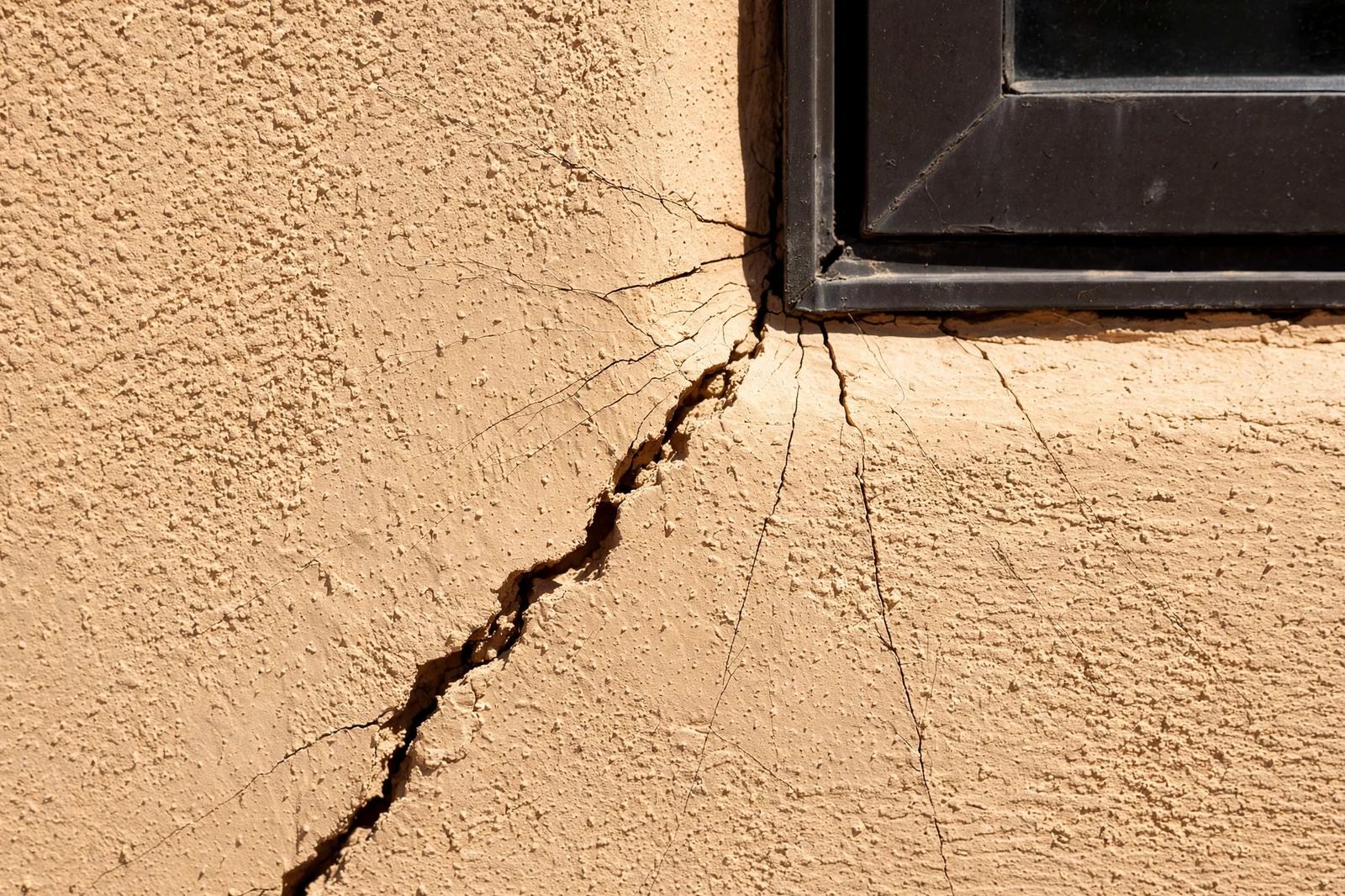
- Gaps where stucco meets windows and doors: Because vinyl, aluminum, and wood frames expand at a different rate than stucco, separation cracks often open right along the window perimeter. Monsoon winds push rain straight into these gaps.
- Wide or growing cracks: Fractures wider than 1/8 of an inch, or cracks where one side of the stucco sits slightly higher than the other, signal active movement.
- Diagonal and stair-step cracks: Cracks that angle sharply off the corners of windows or step along masonry lines point to settling stress.
- Staining, bubbling paint, or hollow spots: Dark streaks below a crack, chalky mineral deposits, peeling paint, or stucco that sounds hollow when you tap it are classic signs that moisture has been sitting behind the wall.
What an Assessment Looks At Before You Decide on Repairs
One of the most common mistakes homeowners make is squeezing a tube of cheap hardware-store caulk into an active stucco crack and painting over it. In our UV exposure, rigid patches turn brittle and split right back open, and sealing the bottom of a wall without finding where water is entering at the top can actually trap moisture inside the framing.
During a complimentary home assessment with Tucson Thermal Diagnostics, my associate Kobe, a certified thermographer, looks at the whole picture before anyone talks about repairs. We examine the exterior cracks, check the seals and transitions around your windows and doors, and inspect the roofline above to make sure a roof or flashing issue is not feeding water down the wall. Inside the house, Kobe uses a thermal camera to scan the interior side of those exterior walls and windows. Because damp materials and air gaps leave distinct surface-temperature patterns, the thermal image helps show whether a crack on the outside is affecting the wall on the inside.